Bitcoin and altcoins in 2026
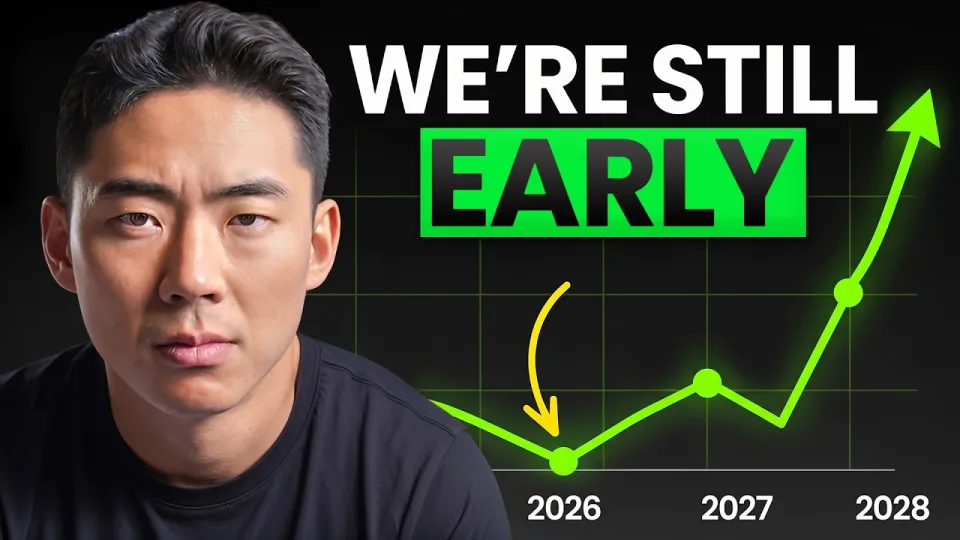
Video: my plan to make millions in crypto 2027
You can order the same kind of articles for your own video to boost it on YouTube and Google. Just message the Telegram bot @sat_sit_bot. The bot writes and publishes the articles itself (with your YouTube video embedded) on popular topical websites (no ads). Your first 50 articles are free.
· based on the channel Brian Jung
Key takeaways
- Brian Jung's breakdown frames the next cycle around two forces: institutional inflows into Bitcoin and rotating altcoin narratives.
- The core allocation question is not Bitcoin versus altcoins but how much of a portfolio should sit in each, given that altcoins can draw down 70-90%.
- Narrative rotation, not static sector lists, drives altcoin outperformance: capital moves from one story to the next within months.
- A rules-based plan, with pre-set entry sizes and exit levels, matters more than any single token pick.
- Kaizen Pro, Brian Jung's paid research product, sits behind the whop.com waitlist link in the video description.
For most people building a crypto position in 2026, the better choice is a Bitcoin-anchored core with a deliberately capped altcoin sleeve, because Bitcoin carries the institutional bid and the deepest liquidity while altcoins supply the upside only if you size them for 70-90% drawdowns. Altcoin-only portfolios are the higher-variance bet, and they only work with strict rules on position size and exits. Brian Jung's breakdown of his own plan for the coming cycle, and the Kaizen Pro waitlist tied to it, is built on exactly that split.
Why crypto still has a bid under it in 2026
The bullish case for crypto in 2026 rests less on retail enthusiasm and more on who is now forced to hold it. Spot Bitcoin ETFs turned Bitcoin into an asset that advisers, pension consultants and model portfolios can allocate to without touching a private key, and that structural demand does not switch off when sentiment sours. The same approval process pulled the largest asset managers, exchanges and custodians into regulated plumbing that did not exist in earlier cycles.
That changes the shape of a cycle. Bitcoin's drawdowns have tended to be shallower and its recoveries faster when ETF flows absorb sell pressure, while the long tail of smaller tokens still trades on liquidity and narrative alone. The practical consequence: the instrument you hold determines the risk you take, and a portfolio that treats every coin as the same bet is mispriced from the start.
A second support is regulatory clarity. Even rejection or delay of certain bills is not automatically bearish, because it removes the ambiguity that keeps large allocators on the sidelines. Markets price uncertainty, not just good news.
The narratives that rotate capital between altcoins
Altcoin returns come from narrative rotation, not from a fixed list of sectors that stays hot for years. Capital crowds into one story, saturates it, and moves to the next, usually within a few months. In the current environment the recurring themes are:
- Real yield and staking. Tokens that pay holders from actual protocol revenue rather than inflation attract capital when rates elsewhere are uncertain.
- Modular infrastructure and restaking. Ethereum's rollup-centric roadmap pushed value toward the layers that settle, secure and data-availability-check transactions.
- High-throughput L1s. Chains such as Sui and Solana compete on consumer applications and cheap execution, and they tend to run hard when activity migrates to them.
- Tokenized real-world assets. Treasuries, private credit and funds moving on-chain bring institutional counterparties, not just speculators.
- AI-adjacent crypto. Compute marketplaces and agent-payment rails are the newest story and the most prone to hype without usage.
The mistake is buying a narrative after it has already been priced. A rotation framework asks three questions before any entry: is usage rising, is the token's supply schedule known, and has the story already run 3-5x? If the answer to the last one is yes, the risk-reward has usually flipped.
How to size a plan that survives a 70% drawdown
A crypto plan is an allocation and exit document, not a watchlist. The steps that matter:
- Fix the total crypto share first. Decide what percentage of net worth belongs in the asset class, and treat that as the ceiling, not a target to average up into.
- Split core and satellite. A Bitcoin and Ethereum core sized at roughly 50-70% of the crypto sleeve gives exposure to institutional flows; the remaining 30-50% is the altcoin book.
- Cap single altcoin positions. No individual small-cap should be able to damage the portfolio on its own; 2-5% of the crypto sleeve per name is a common ceiling.
- Define exits before entry. Write down the price or the condition at which you take profit and the one at which you admit the thesis failed.
- Rebalance on rules, not feelings. When the altcoin book doubles its target weight, trim back into the core.
This is also where most retail losses originate. Buyers who entered near a previous top and watched the position fall 80% did not lack conviction; they lacked a size limit and an exit. A plan that assumes altcoins can drop 70-90% and still leaves you solvent is the only version worth running.
Typical questions and doubts from traders
Three doubts come up repeatedly around any bullish crypto thesis. The first is timing: whether the top of the cycle is months or years away. Honest answer: nobody knows, which is why the plan should be built on price levels and position sizes rather than a date. The second is credibility: a creator who is structurally bullish will always sound optimistic, so weigh the framework, not the forecast. The third is the banking question: whether regulated banks entering crypto is good or bad for the asset class. Custody and ETF access broaden ownership, but they also concentrate influence in intermediaries, and both effects are real.
The useful response to all three is the same. Assume you can be wrong, keep the position small enough that being wrong is survivable, and let the market tell you when the thesis is working.
Resources mentioned alongside the breakdown
- Kaizen Pro waitlist — Brian Jung's paid research product and community.
- Kaizen free crypto market report newsletter — weekly market notes.
- Brian Jung on X and Instagram.
- Risks and disclaimers document.
Bottom line
The crypto decision that matters in 2026 is not which single coin will win but how the portfolio is structured: a Bitcoin-heavy core for the institutional bid, a capped altcoin sleeve for narrative upside, and written exit rules for both. Brian Jung, the author of the video breakdown this article draws on, frames his own plan around that same discipline rather than around a price prediction. If you want his full research process, the Kaizen Pro waitlist is the entry point he links. Treat every allocation as risk capital, and size it so a 70% drawdown changes your mood, not your life.
Questions & answers
Is it better to hold Bitcoin or altcoins in 2026?
Bitcoin is the lower-variance core because ETF flows and institutional custody create structural demand and deeper liquidity. Altcoins offer higher upside but routinely draw down 70-90%, so they belong in a capped satellite allocation rather than as the base of a portfolio.
How much of a crypto portfolio should be in altcoins?
A common structure is 50-70% in a Bitcoin and Ethereum core and 30-50% in altcoins, with each individual small-cap capped at a few percent of the crypto sleeve. The right number is the one that still leaves you solvent after an 80% altcoin drawdown.
Does regulatory rejection hurt crypto?
Not necessarily. Markets price uncertainty, and removing ambiguity can be neutral or positive for large allocators even when a specific bill fails. What matters more is whether custody, ETFs and banking access keep expanding.
How do I know when to sell an altcoin?
Decide the exit before you enter: a price target for taking profit and a condition that invalidates the thesis. Altcoin narratives rotate within months, so a position held without a trim rule usually gives back its gains.
Source: my plan to make millions in crypto 2027 · Markdown version